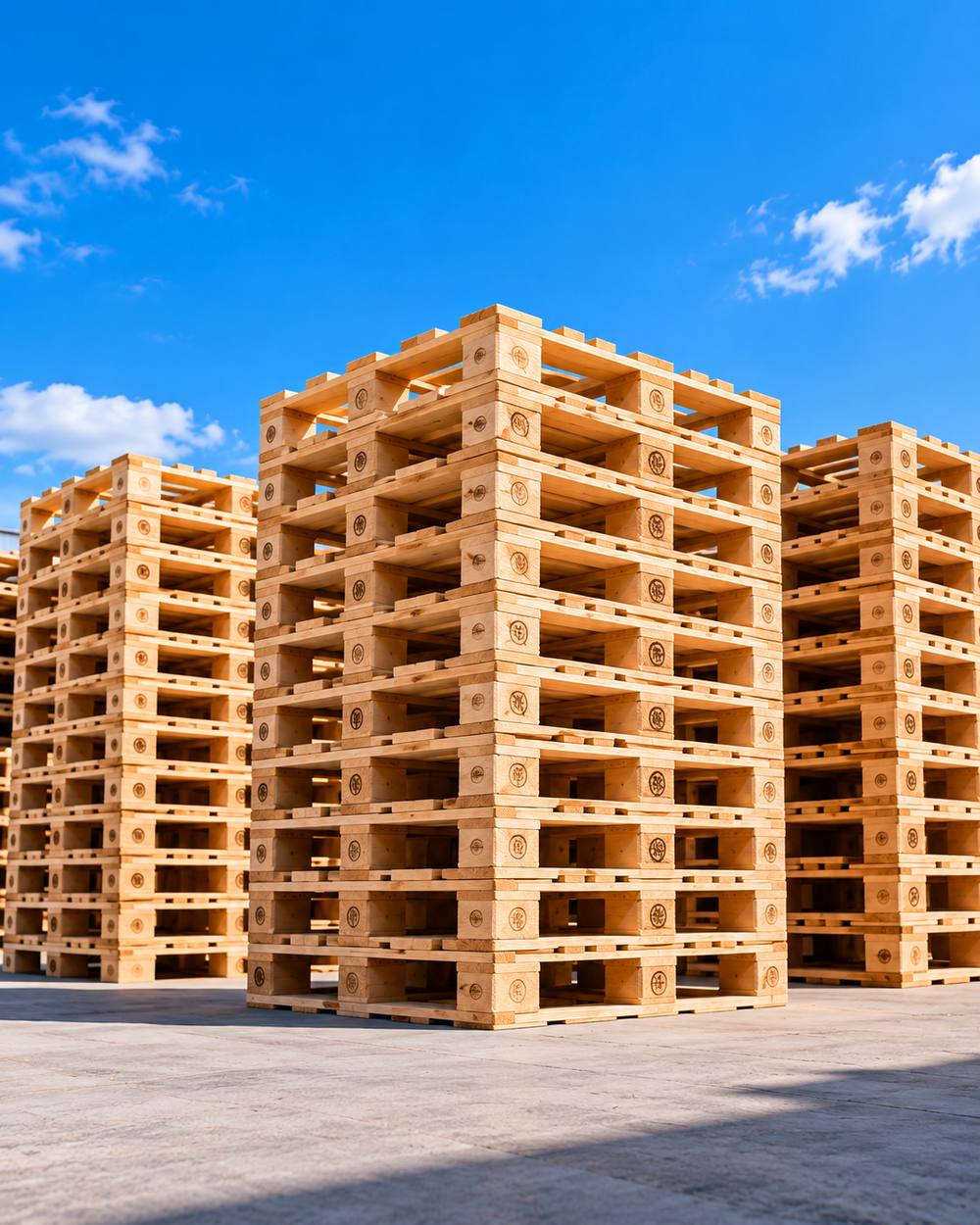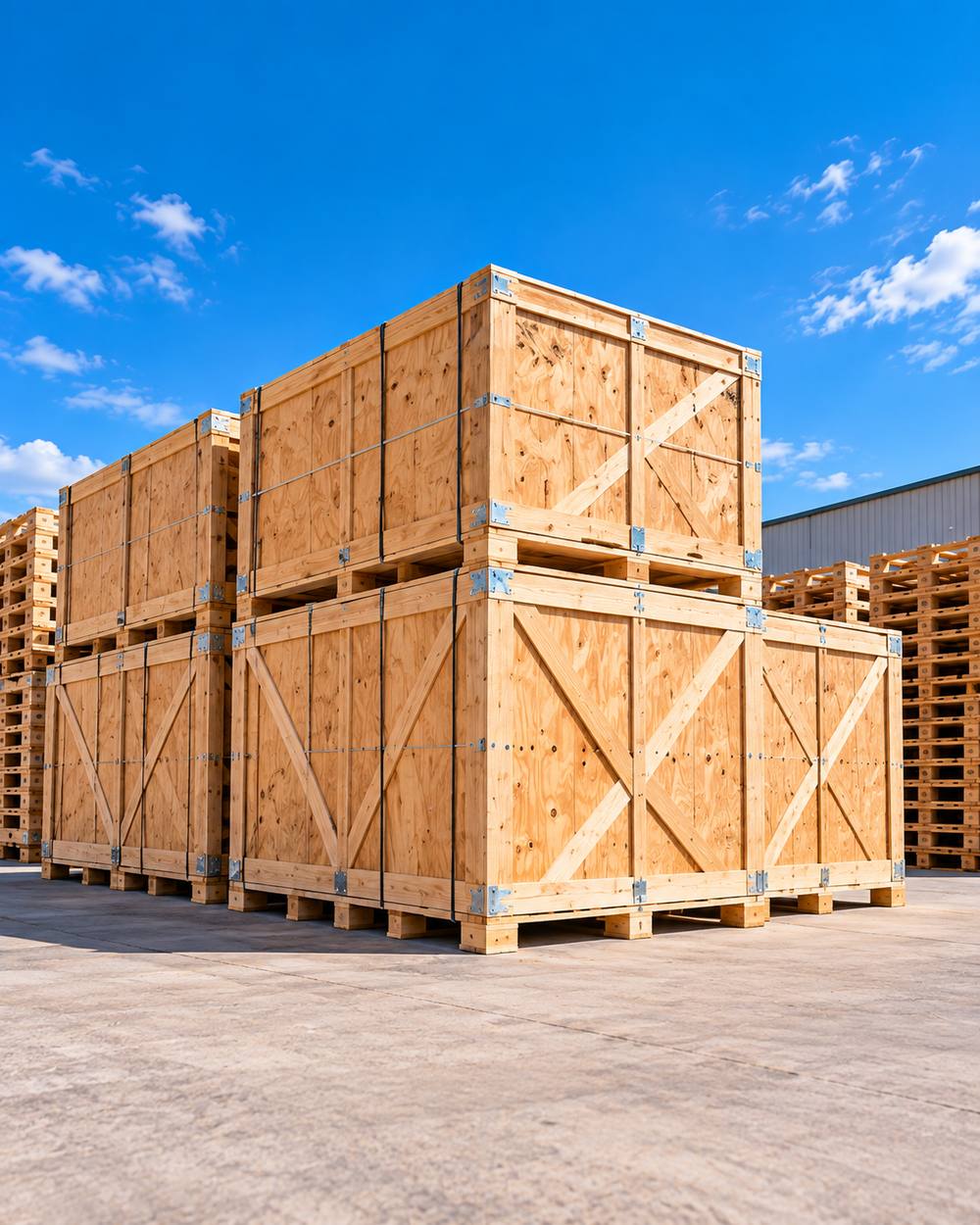
2-Way Entry
Forklifts and pallet jacks enter from the two ends only. Typical of stringer pallets with solid stringers.
- Stringer pallets
- Budget-friendly
- Straight-in handling
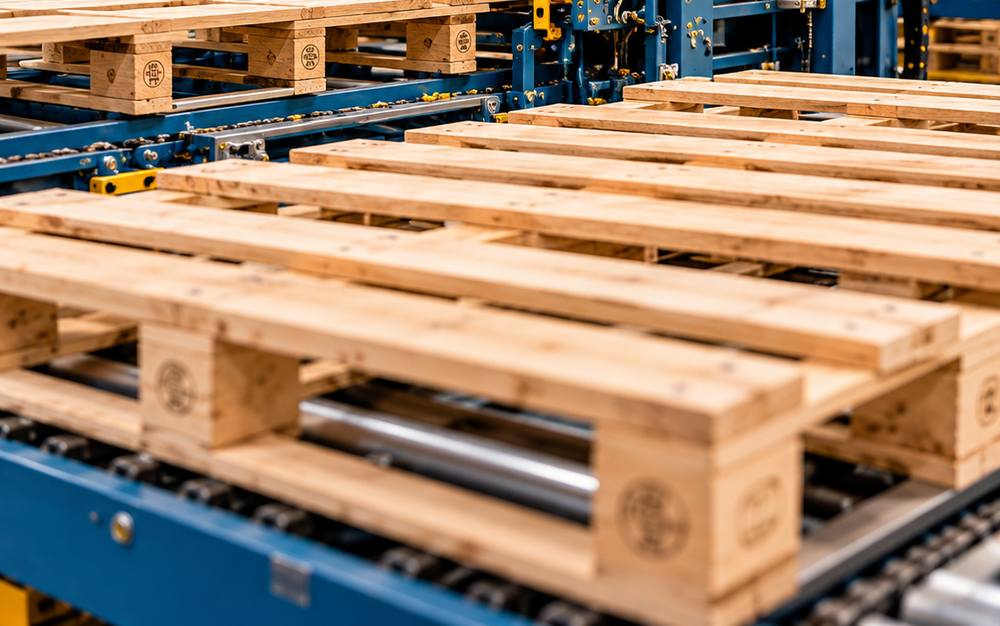
Specs · 5 min read
A quick reference to standard pallet dimensions, how they’re used, and how 2-way and 4-way entry differ.
The 48″ × 40″ pallet — often called the GMA pallet — is the most common size in North America. It fits standard racking, works with most handling equipment and loads efficiently into trailers. A 53-foot trailer typically holds 26 of them on the floor loaded straight, or about 30 when turned (pinwheeled).
Sizes are listed length × width in inches. The first number is the stringer length.
| Size (in.) | Common industries & uses |
|---|---|
| 48 × 40 | Grocery, consumer goods and general freight — the most common pallet in North America |
| 42 × 42 | Telecommunications, paint |
| 48 × 48 | 55-gallon drums |
| 40 × 48 | Military, cement |
| 48 × 42 | Chemical, beverage |
| 40 × 40 | Dairy |
| 48 × 45 | Automotive |
| 44 × 44 | Drums, chemical |
| 36 × 36 | Beverage |
| 48 × 36 | Beverage, shingles, packaged paper |
Entry type describes which sides of a pallet forklifts and pallet jacks can enter.
Forklifts and pallet jacks enter from the two ends only. Typical of stringer pallets with solid stringers.
Notched stringers let forklift tines enter from the sides too — but pallet jacks still need the ends.
Blocks instead of stringers open all four sides to forklifts and pallet jacks alike.
Before you order, have answers to a few questions:
Bring those answers to our team and we’ll recommend a size and construction — or build a custom pallet around them.
Our team will help you choose the right option.
Keep Reading
Let’s Keep Your Business Moving
Whether you need new pallets, custom builds, repair, recycling or ongoing supply, tell us what you need and our team will help you find the right solution.
Monday – Friday, 7:00 AM – 3:00 PM
Tell us what you need. We’ll follow up with pricing and availability.