What is ISPM-15?
ISPM-15 is the international standard for wood packaging material in international trade, published under the International Plant Protection Convention (IPPC). Its goal is simple: stop wood-boring insects and other pests from traveling across borders inside pallets, crates and dunnage.
Countries that enforce it require solid wood packaging to be debarked, treated with an approved method, and marked with the official stamp before it ships.
What it covers — and what it doesn’t
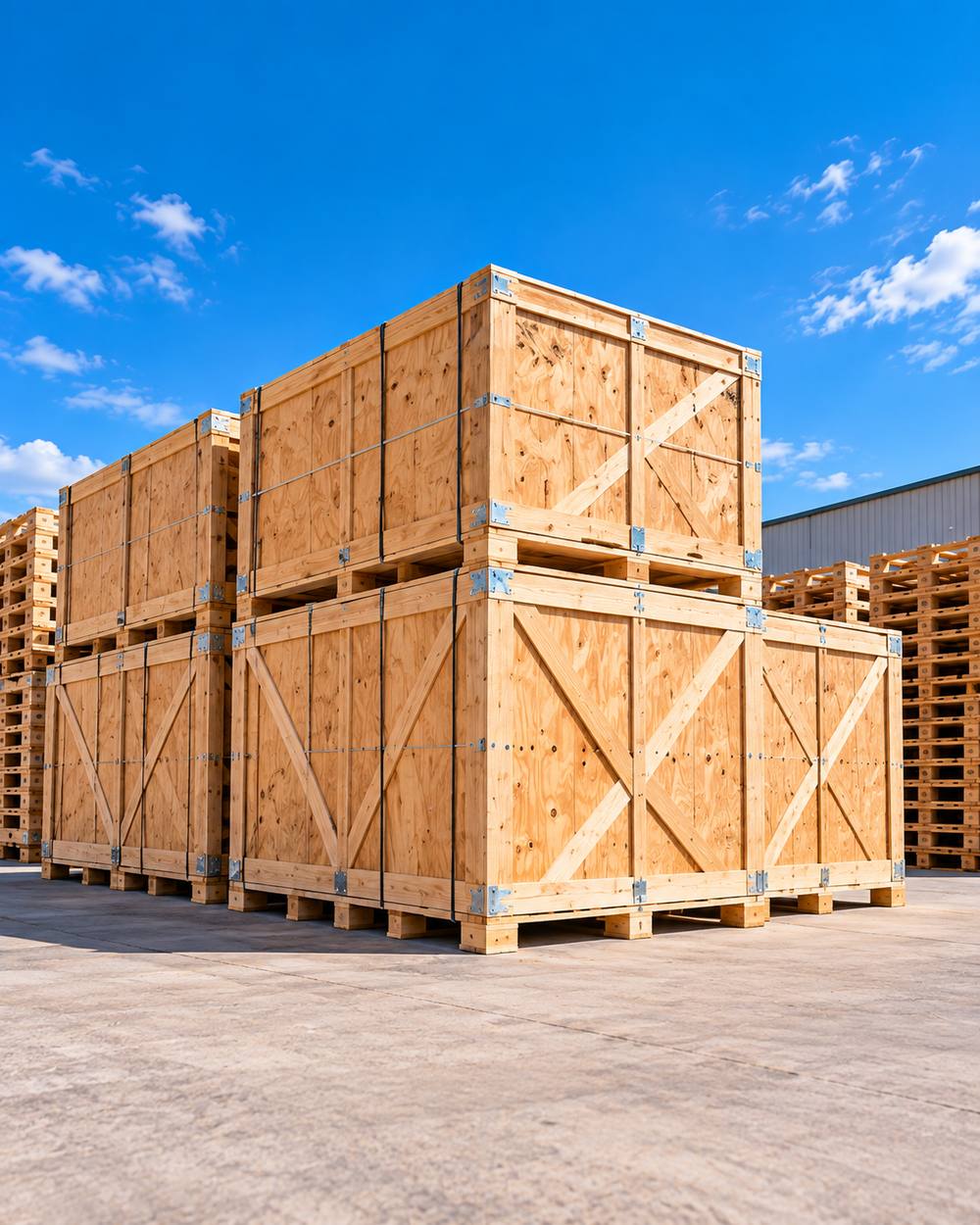
Covered: solid wood packaging such as pallets, skids, crates, boxes, blocking and dunnage.
Generally exempt: packaging made entirely of processed wood like plywood, OSB or particleboard, and very thin wood (6 mm or less).
How heat treatment works
Heat treatment (HT) is the most common ISPM-15 method in the United States. Wood is heated until its core reaches at least 56 °C (132.8 °F) for at least 30 continuous minutes. No chemicals are involved, which is one reason some companies choose heat-treated pallets even for domestic shipping.
Heat treatment is not the same as kiln drying for moisture content. A pallet must be treated and stamped under the ISPM-15 program to qualify.
How to read the stamp
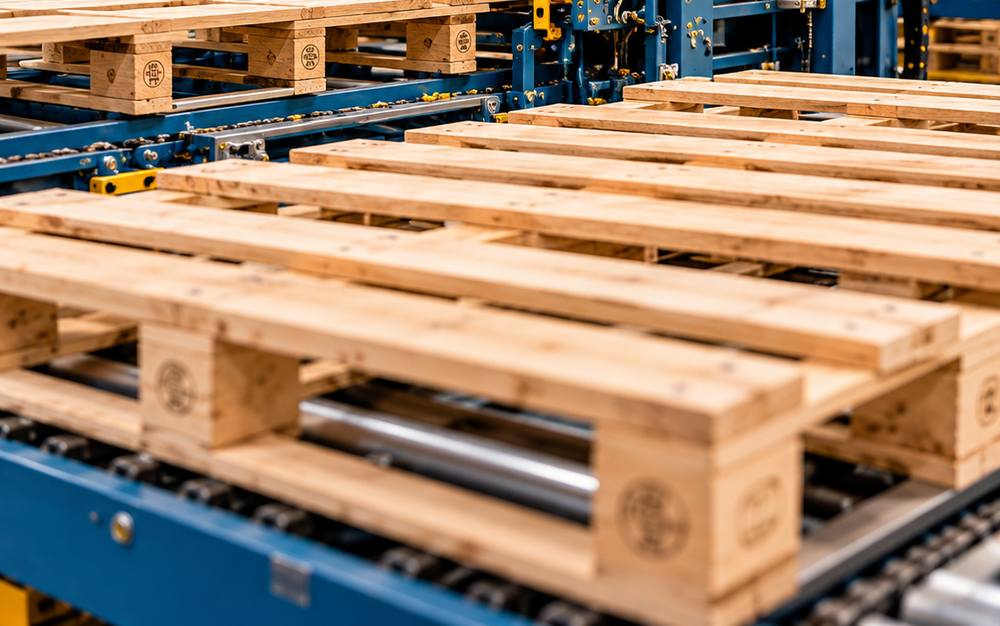
Compliant wood packaging carries a mark on at least two opposite sides. It includes:
- IPPC symbol — the official mark of the International Plant Protection Convention.
- Country code — two letters for where the wood was treated (US).
- Producer number — the unique ID of the registered treatment facility.
- Treatment code — HT for heat treatment.
In the U.S., the program is overseen by USDA APHIS, with the American Lumber Standard Committee (ALSC) accrediting the agencies that audit treatment facilities.
When do you need heat-treated pallets?
- Shipping to any country that enforces ISPM-15 — which includes most major trading partners.
- When your importer, customer or freight forwarder requires it.
- Shipments between the U.S. and Canada have historically followed separate rules — confirm current requirements for your lane.
Purely domestic shipments generally don’t require ISPM-15 pallets.
What happens if pallets aren’t compliant?
Non-compliant wood packaging can be held at the border, treated, destroyed or sent back — often at the shipper’s expense, and always with delays. Using stamped pallets from the start is the simplest way to avoid that.
Pre-export checklist
- Confirm the destination’s requirements with your forwarder or importer.
- Order heat-treated pallets, crates or skids — standard or custom size.
- Check that the ISPM-15 mark is legible on two opposite sides.
- Keep packaging dry and intact until it ships.
Have a question about your pallets?
Our team will help you choose the right option.